


The easiest way to travel through London depends on the moment.
The city is large, and different parts of London ask for different choices. The Tube can be the quickest way to cross the city. A bus can be more pleasant for a short ride. The Elizabeth line is useful for some longer routes, especially when you travel between Heathrow, Paddington, Tottenham Court Road, Liverpool Street or Canary Wharf. And in central London, walking can sometimes be easier than changing lines underground.
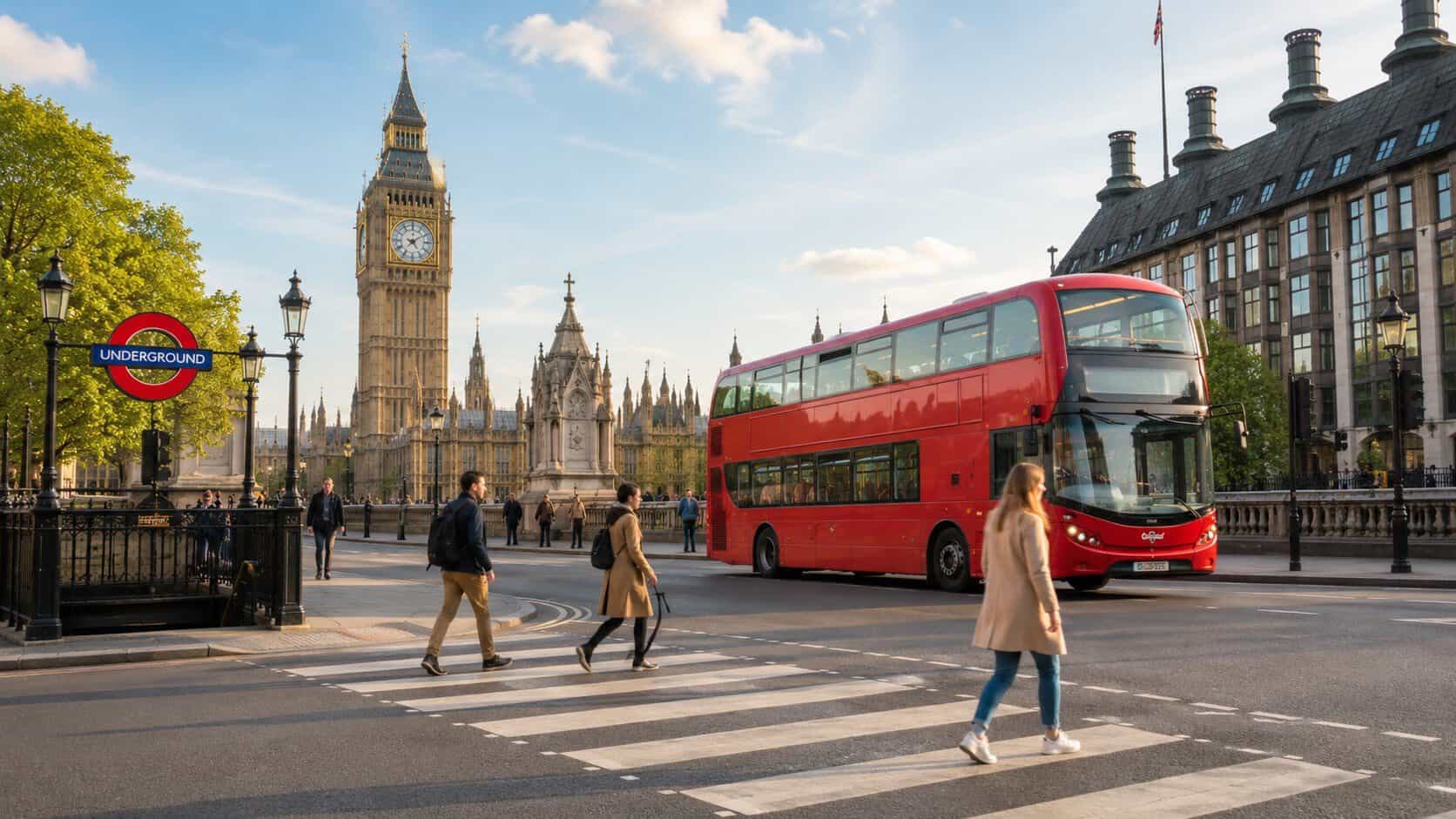
For a first visit, you do not need to understand every line before you arrive. It helps more to know the main transport options and when each one makes sense.
 The Tube / London Underground
 The Tube / London Underground
The Tube is often the fastest way to travel across London. It connects many major sights, shopping areas, museums, train stations and neighbourhoods, so most visitors use it several times during a city trip.
It is especially useful when you travel longer distances across the city, for example from your hotel to a museum area, theatre district or main train station.
The Tube is not always the most comfortable choice for every journey. Some stations have long corridors, stairs, escalators and busy platforms. During rush hour, trains and stations can feel very crowded. That does not mean you should avoid the Tube, but it helps to use it when it really saves time.
 Travelglaze Tip: The Tube can feel warmer than expected, especially on deep underground platforms and busy trains. Even in winter, wear layers you can easily open or remove, so your journey stays more comfortable between stops.
London buses
 London buses
London buses are useful when you want to stay above ground, avoid long walks inside stations, or travel a shorter distance through central London.
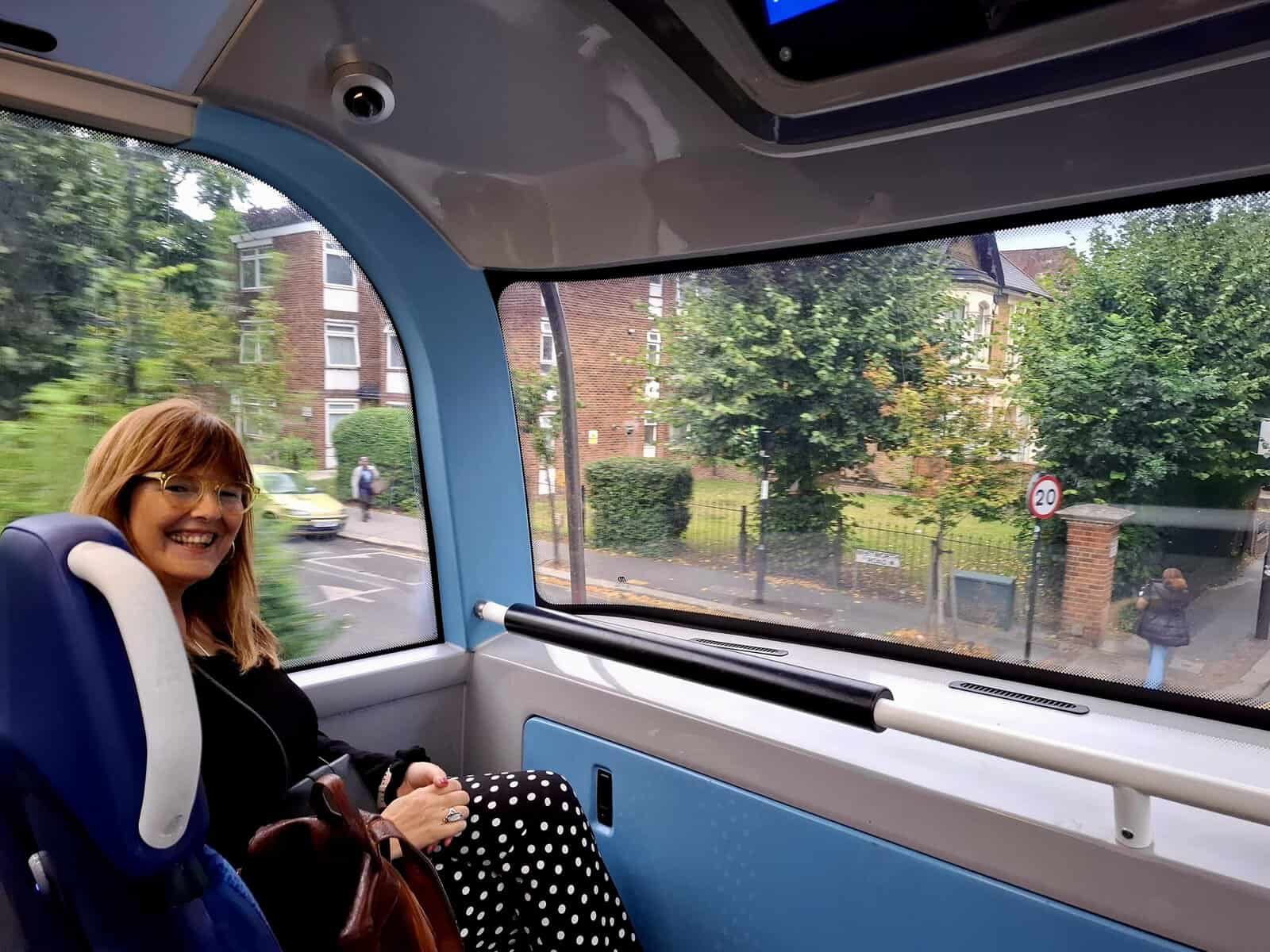
They are slower than the Tube on some routes, especially in traffic, but they can feel much easier. You can see where you are going, get off closer to your destination, and enjoy a small part of London from the window.
Buses are also helpful in areas where Tube stations are not very close together. For visitors, they work best when you use a route app instead of trying to understand the whole bus network yourself.
Travelglaze Tip: Take at least one double-decker bus during your London trip and sit upstairs if you can. Bus 24 is a good option for a scenic ride, with stops near Westminster Abbey, Parliament Square, Trafalgar Square, Leicester Square, Tottenham Court Road, Camden Town and Camden Market. It gives you a very different view of London than walking.
Elizabeth line
 Elizabeth line
The Elizabeth line is one of the most useful lines for visitors because it connects several important parts of London in a fast and comfortable way.
The Elizabeth line is not a Tube line, but a modern rail line that works as part of London’s public transport network. For visitors, it can feel simple because you can use it in the same route-planning apps and pay with contactless or Oyster on many journeys.
It is especially useful for longer routes across the city, including journeys between Heathrow Airport, Paddington, Tottenham Court Road, Liverpool Street and Canary Wharf.
Travelglaze Tip: Flying into Heathrow? The Elizabeth line can be one of the easiest ways to travel into central London. For a full comparison of London airport routes, read my guide to London airports before you choose where to arrive.
🚆 Overground, DLR and National Rail
Some London routes use the Overground, DLR or National Rail. You do not need to study these systems before your trip, but you may see them appear in your route app.
The Overground is useful for several neighbourhoods outside the very central tourist area. The DLR is often used for parts of East London, including routes towards Greenwich and Canary Wharf. National Rail trains can be part of journeys to airports, outer London areas or nearby day trips.
London also has trams, mainly in parts of South London. Most first-time visitors do not need them for the main central sights, but they may appear in your route app if you stay or travel in that area.
🚶 Walking
Walking is one of the most useful transport choices in London, especially in the centre.
Some famous areas are very close together. Covent Garden, Soho, Chinatown, Leicester Square, Piccadilly Circus and Trafalgar Square can often be combined on foot. Around the South Bank, walking is also part of the experience, with river views, bridges, museums and food stops along the way.
Walking does not mean you have to walk all day. It simply means checking whether one part of your route is easier above ground than underground.
⛴️ River Bus on the Thames
London also has public transport on the River Thames. The River Bus, operated by Uber Boat by Thames Clippers, connects several piers along the river and can be a scenic way to travel between parts of the city.
It works differently from the Tube or bus. You can pay with contactless or Oyster, but River Bus fares are separate from the normal daily fare cap for Tube, bus and rail journeys. You also need to touch in when you board and touch out at the end of your journey.
For visitors, the River Bus can be useful when your route follows the Thames, for example between central London, the South Bank, Tower, Canary Wharf or Greenwich. It is usually not the cheapest or fastest option, but it can make the journey feel like part of the day.
💡 Travelglaze Tip: Use the River Bus when the river route fits your plan, not only as a shortcut. It can be a lovely way to arrive in places like Greenwich, but check the price and pier location before you choose it.
An Oyster card is a reusable smartcard for public transport in London. You add credit to the card and use it to pay as you go on the Tube, buses, trams, DLR, London Overground, most Elizabeth line services and many National Rail journeys within London.
There are two types visitors may come across. A standard Oyster card is the card you can buy after you arrive in London. You can also connect it to TfL’s online system (Transport for London) if you want to check journeys, manage refunds or protect the card if it gets lost.
A Visitor Oyster card is bought before your trip and comes with credit already loaded onto it. You can use it in London and add more credit if needed, but it cannot be registered online. That makes it less flexible if you lose it or want to manage it after your trip.
A contactless bank card, phone or smartwatch can often do the same job without buying a separate travel card. You tap in and out in the same way, and fare capping can still apply when you use the same payment method correctly.
So the choice depends on how you like to travel. Contactless can be convenient if your card works well in the UK and your bank fees are low. A standard Oyster card can be useful if you want a separate travel card you can buy in London. A Visitor Oyster card can make sense if you prefer to have a transport card ready before you arrive.
Travelglaze Tip: Before you choose, check three things: whether your bank charges foreign transaction fees, whether you prefer using your own card or a separate travel card, and whether you want the card ready before arrival. That usually makes the Oyster-or-contactless choice much clearer.
🧭 Final thoughts
Getting around London becomes much easier when you choose your transport by situation.
The Tube is useful for crossing the city quickly, buses give you a better view above ground, and the Elizabeth line can be a comfortable option for some longer routes. Walking works well for small central areas, while the River Bus can add a scenic Thames journey when it fits your route. If you are near Greenwich Peninsula or Royal Docks, the IFS Cloud Cable Car is another unusual way to cross the river. 
A taxi, black cab or ride-hailing service can also be practical with luggage, late at night or when you want a direct route. It is not part of Oyster or contactless fare capping, but it can still be the easier choice in the right moment.
Once you understand the main options, London transport becomes part of the trip itself: practical when you need speed, scenic when you choose the bus or river, and flexible enough to match the way you want to explore the city.
Have you used public transport in London before? Share your easiest London transport tip in the comments.
